
- ◆Instructions are not won at the valuation. They are won in the week before and the week after.
- ◆AI helps with both. Pre-valuation research with Perplexity. A personalised cover letter in ten minutes. Three follow-up emails most agents never send, with ready-to-use prompts for each one.
- ◆This guide also covers how Gamma produces a pre-valuation market summary in two minutes.

You attended the valuation. You knew the area. You said the right things. You followed up once. Nothing back. The vendor listed with someone else.
It is not always about fee. It is not always about the price you quoted. Sometimes it is just that the other agent felt more prepared. More thorough. More on it.
AI does not make you a better agent. What it does is give you more time to be one. Preparation that used to take an hour takes fifteen minutes. Follow-up that never quite happened gets written and sent. Research that you meant to do before the appointment actually gets done.
This guide covers where the time goes and how to get it back.
What You Will Learn
– Where instructions are actually won and lost
– How to use AI to prepare before a valuation
– The pitch summary prompt worth using before every appraisal
– The three follow-up emails most agents never send
– How Gamma helps you look more prepared in competitive situations
– What AI cannot do and why that is the point
Where Instructions Are Won and Lost
Most agents focus on the valuation itself. The figure, the pitch, the handshake. Those things matter. But they are not usually where the decision gets made.
The decision gets made in the days before and the week after.
Before: the vendor Googled you. They looked at your recent listings. They noticed whether your property descriptions were good or generic. They formed an opinion before you walked through the door. If you want to know how to make those descriptions better, Post 2 covers it.
After: you either followed up or you did not. You either sent something useful or you sent nothing. Most agents send one follow-up email and then wait. The ones who win the instruction are usually the ones who stayed visible without being annoying.
AI helps with both sides. The preparation before, and the follow-up after.

Pre-Valuation Prep With AI
Three things worth doing before every market appraisal. None of them take long. Together they mean you walk in knowing more than most agents will bother to find out.
1. Comparable Research With Perplexity
Before the appraisal, open Perplexity and search the street or postcode. Ask it to summarise recent sold prices, current listings, and average time on market for that area. It pulls from live sources and tells you where it got the information from.
Do not use ChatGPT or Claude for this. Their training data has a cutoff and property prices change fast. Perplexity searches in real time. That is the difference when you need current comparables, not last year’s figures.
“What have three-bedroom semi-detached houses sold for on [street name] or nearby streets in [area] in the last six months? What is currently listed nearby and at what price? What is the average time on market for this property type in this area right now?”
2. A Personalised Vendor Cover Letter
Most agents arrive with a standard pack. Same brochure, same stats, same spiel. A short personalised letter addressed to the vendor by name, referencing the property specifically, lands differently.
AI writes the first draft. You add the local knowledge and the specific detail. Ten minutes instead of thirty.
“Write a 200-word cover letter to a vendor ahead of a market appraisal. Vendor name: [name]. Property: [address, type, brief description]. Our agency: [name, area specialism, any relevant recent sales nearby]. Tone: warm, confident, and locally knowledgeable. Do not use estate agent clichés. Do not make any claims about valuation figure or timescale. End with a clear next step confirming the appointment.”
3. A Quick Street and Area Brief
Ask Claude or ChatGPT for a short summary of what buyers typically look for in that postcode, what the area is known for, and what the common objections are from sellers in that type of property. It gives you talking points you might not have thought of. Some will be wrong. Edit those out. Most will be close enough to be useful.
“Give me a brief on [area / postcode] for a property valuation. What do buyers typically prioritise when buying in this area? What are common vendor concerns or objections in this market? What local features or amenities tend to come up in property descriptions? Keep it to bullet points, under 150 words. I will verify any facts independently before using them.”
ChatGPT and Claude will sometimes produce comparable figures that sound plausible but are outdated or wrong. Use Perplexity for anything price-related. It cites live sources. And verify any figure independently before you quote it to a vendor. Wrong comps at a valuation lose the instruction and damage your reputation. No draft from any AI tool is fact-checked.
The Three Follow-Up Emails Most Agents Never Send
Most agents send one email after a valuation. Sometimes two. The ones who win instructions in competitive situations tend to send three, spaced across the following week.
Not aggressive. Not pushy. Just present.
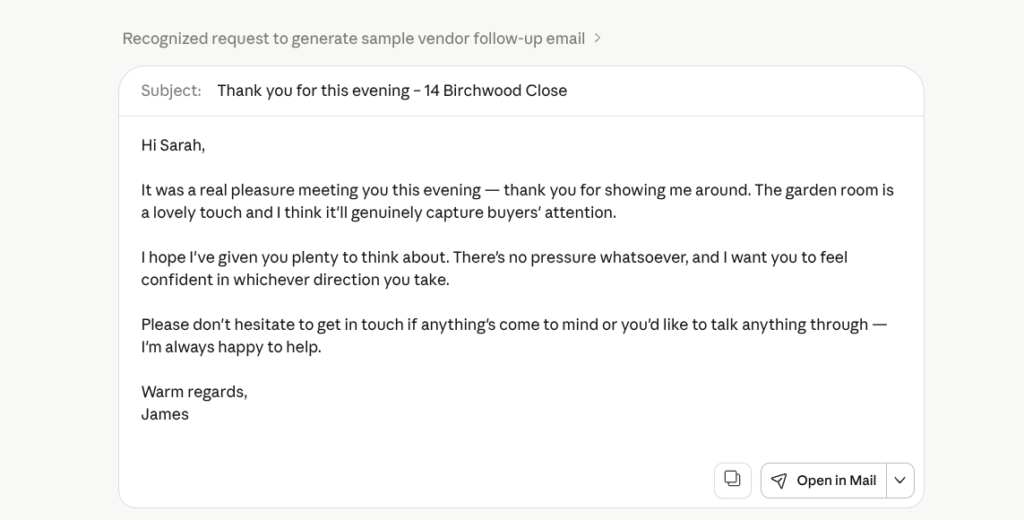
Email 1 – The Evening of the Valuation
Brief. Warm. Confirms you are interested. References something specific from the appointment so it does not read like a template.
“Write a short follow-up email to a vendor after a market appraisal this evening. Vendor name: [name]. Property: [address]. One specific thing we discussed: [mention something from the appointment]. Tone: warm and genuine, not salesy. Under 100 words. Do not mention fees or valuation figures. End by saying you are available if they have any questions.”
Email 2 – Three Days Later
A bit more substance. Include something useful. A link to a recent comparable sale nearby. A note about current buyer demand. Something that adds value rather than just asking if they have decided yet.
“Write a 120-word follow-up email to a vendor three days after a market appraisal. Vendor name: [name]. Property: [address]. Include a brief reference to [a relevant recent sale or market update in the area — add your own verified detail here]. Tone: helpful and informative, not chasing. End with a light offer to answer any questions before they make their decision.”
Email 3 – One Week Later
The close-off. Brief, confident, leaves the door open. Not apologetic. If they have gone elsewhere, that is fine. If they have not decided, this is the one that sometimes tips it.
“Write a short close-off email to a vendor one week after a market appraisal. Vendor name: [name]. Property: [address]. Tone: calm and confident. Do not apologise for following up. Acknowledge they may have made a decision. Leave the door open if they have not. Under 80 words.”
Once a vendor comes back to you and enquiries start landing, the guide to replying to portal enquiries faster covers the next set of templates worth having ready.
Save the prompts, not just the emails
The same approach as the sales progression templates. Write a good brief once, save it, swap the details for each vendor. The three-email sequence becomes a ten-minute job after each valuation rather than something you mean to do and never quite get round to.
Want the Follow-Up Prompts Built for You?
The Prompt Machine builds the brief for each task. Pick your scenario, answer three questions, and get a prompt to paste into Claude or ChatGPT. Free. Takes about a minute.
Try the Prompt Machine → Free. One page. No signup faff.Looking More Prepared With Gamma
For competitive instructions – new builds, higher value properties, situations where you are up against two or three other agents, a one-page market overview or pre-valuation summary document makes a difference.
Gamma builds it from a prompt in about two minutes. You give it the key points: the area, the property type, recent market context, your agency’s relevant experience. It produces a clean, professional document you can email before the appointment or hand over when you arrive.
It is not about flashy slides. It is about showing you did the work before you got there. Gamma has a free plan that covers this. No subscription needed to try it.
“Create a two-page market summary document for a vendor ahead of a property valuation. Area: [location]. Property type: [type]. Include a brief overview of current market conditions in this area, typical buyer profile, and what tends to affect sale price and speed for this property type. Keep it factual, professional, and under 300 words. Design: clean, minimal, professional.”
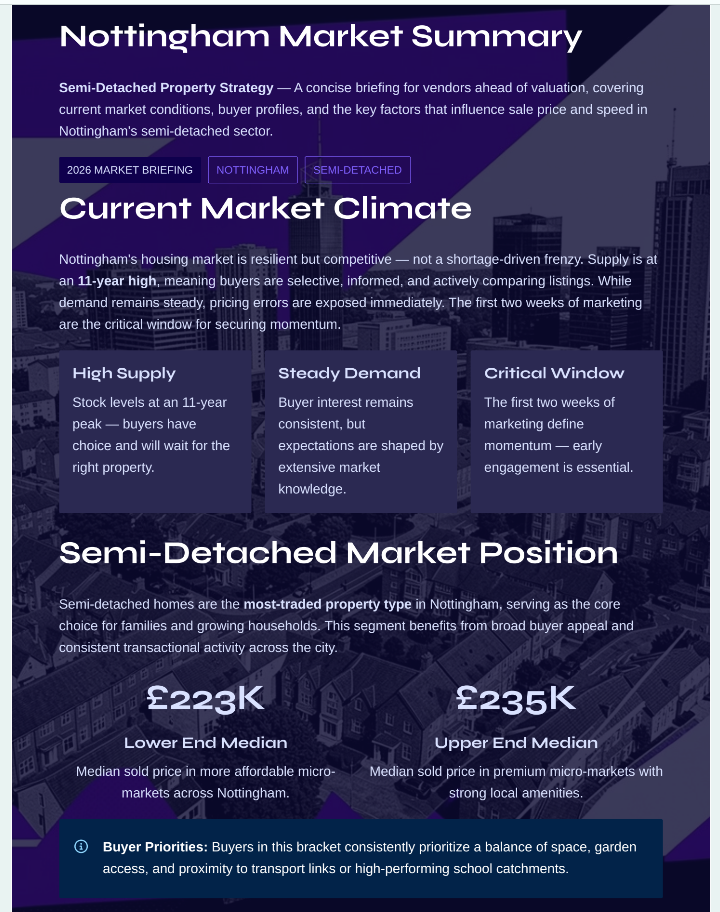
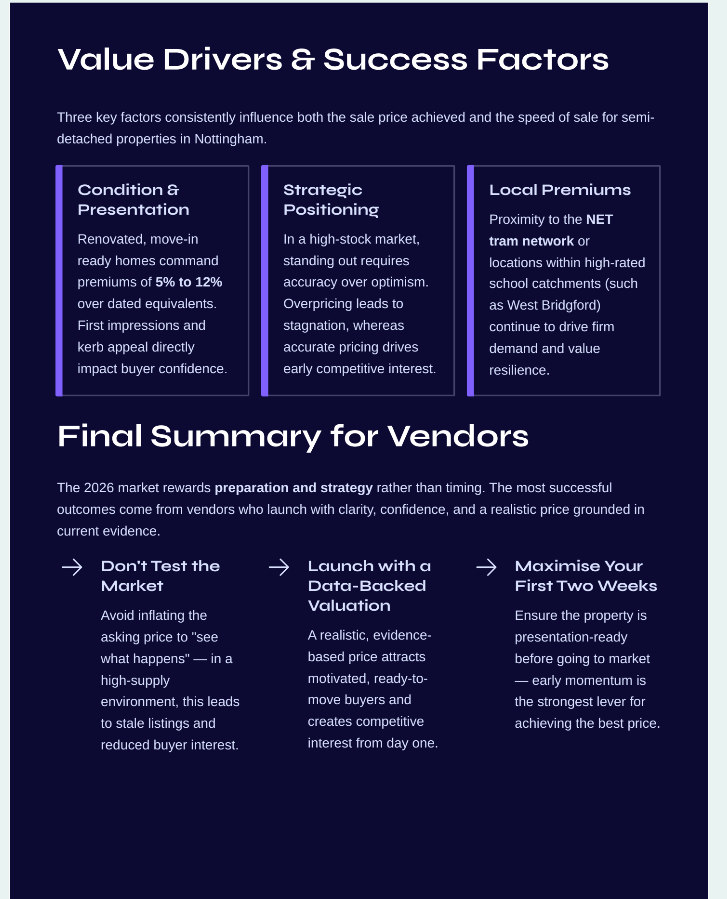
Two minutes in Gamma. Something to send before the appointment or hand over when you arrive.2. Screenshot the output document Gamma produces
What AI Cannot Do
It cannot tell a vendor something true about their street that only someone who has sold on it three times would know. It cannot read the room when the vendor is anxious about moving their mother’s belongings. It cannot build the trust that comes from being the agent who sold their neighbour’s house two years ago and handled it well.
Those things are still yours. AI gives you more time and more preparation so you show up with those things intact rather than rushing in underprepared with a printed-off rightmove report and a prayer.
The agents who use it well are not the ones replacing their instincts with prompts. They are the ones using it to handle the repetitive preparation so the human stuff gets the attention it deserves.

Try This Before Your Next Valuation
Pick your next market appraisal. Before you go, run the Perplexity research prompt above. Write the personalised cover letter using the prompt and edit it. Take five minutes to add something specific from your own knowledge of the area.
After the appointment, use the same-evening follow-up prompt. Send it before you go to bed.
That is more preparation and better follow-up than most of your competition will manage. And it took about twenty minutes.
The prompt writing guide covers how to tighten any of these prompts further if the output is not quite landing right.
If you are still weighing up whether AI is worth the effort at all, the honest answer to whether AI works for estate agents is worth reading before you decide.
Want a System Built Around Winning Instructions?
The prompts here get you started. If you want the follow-up sequence automated so it runs without you having to remember, that is what Spark Automations builds. The Discovery Audit maps out exactly what to connect.
Book Discovery Audit → What does your business need?Questions People Actually Ask
Yes, in specific ways. Faster pre-valuation research, personalised cover letters, and structured follow-up emails. AI handles the preparation and drafting. The local knowledge, relationship, and trust are still yours.
Perplexity for comparable research, it searches live sources rather than relying on training data. Claude or ChatGPT for drafting letters and follow-up emails. Gamma for producing a pre-valuation summary document quickly.
Use Perplexity rather than ChatGPT or Claude. Ask it for recent sold prices on the street or nearby, current listings, and average time on market. It pulls from live sources and cites them. Verify any figure before you quote it to a vendor.
The first one should be brief, warm, and reference something specific from the appointment. The second, three days later, should include something useful, a market update or a relevant recent sale. The third, a week later, should close the loop without pressure and leave the door open.
Three tends to be enough. Same-evening, three days later, one week later. Spaced correctly they come across as thorough rather than pushy. Most agents send one or none, so three already puts you ahead.
Not reliably. ChatGPT and Claude have training data cutoffs and property prices change quickly. Use Perplexity for anything price or market related. It searches in real time and tells you where the information came from.
Gamma is a tool that builds documents and presentations from a prompt. For estate agents, it is useful for producing a pre-valuation market summary quickly. Give it the area, property type, and key points and it produces a clean one-page document in about two minutes.
Local knowledge that only comes from experience. Reading the room at an appointment. The trust that comes from a track record in the area. AI handles preparation and follow-up drafting. The relationship part is still yours.
Also in this series
Part 1: How to Auto-Post New Listings to Instagram
Part 2: AI for Property Descriptions: How Estate Agents Save Time
Part 3: How to Reply to Rightmove and Zoopla Enquiries Faster With AI
Part 4: How to Stop Writing the Same Sales Progression Emails Every Week
Part 5: How Estate Agents Are Using AI to Win More Instructions — you are here
Part 6: Does AI Really Work for Estate Agents or Is It Hype?
Read Part 6 →